

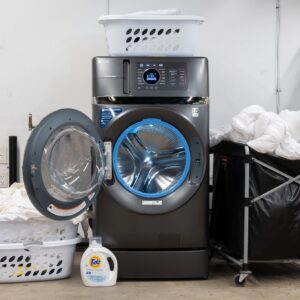
You put a load of wet clothes into the dryer, select a normal cycle, and come back later expecting warm, dry laundry.
Instead, the clothes are still damp.
If your dryer suddenly requires two or three cycles to do a job it used to complete in one, don’t automatically assume you need a new appliance. Several common problems can prevent a dryer from drying clothes efficiently.
For Texas homeowners, dryer performance can also be affected by ventilation, lint buildup, humidity, and the conditions around the appliance.
At Professional Appliance Repairs, we help homeowners throughout Texas diagnose dryer problems and determine whether a simple maintenance issue or a component failure is responsible.
1. The Dryer Vent May Be Restricted
One of the first things to consider when a dryer isn’t drying properly is airflow.
A dryer needs to move hot, moist air out of the appliance. If the vent or exhaust duct is restricted by lint, debris, or a crushed section of ductwork, moisture can become trapped inside the dryer.
The result?
Your clothes may remain damp even though the dryer is getting hot.
Restricted airflow can also cause the dryer to run hotter and longer than it should.
If you’ve noticed increasingly long drying times, the ventilation system deserves attention.
2. The Lint Filter May Be Dirty
Cleaning the lint filter after every load is one of the easiest ways to help your dryer maintain proper airflow.
A heavily clogged filter reduces airflow and can make drying less efficient.
However, it’s important to remember that cleaning the lint screen doesn’t necessarily mean the entire ventilation system is clear. Lint can also accumulate deeper inside the dryer or vent system.
3. The Heating System May Be Failing
If your dryer isn’t producing enough heat, clothes will take much longer to dry.
Depending on the appliance, the problem could involve:
- A heating element
- Thermal fuse
- Igniter
- Gas valve components
- Thermostat
- Temperature sensor
- Control system
Gas and electric dryers use different heating systems, so diagnosing the exact cause requires understanding the appliance’s design.
If your dryer tumbles normally but never gets properly warm, professional diagnosis is recommended.
4. The Dryer May Be Overloaded
Putting too many clothes into the dryer can significantly reduce drying performance.
Clothes need room to tumble so warm air can circulate around them.
When the drum is packed tightly, wet clothing can form a dense mass that prevents adequate airflow.
Instead of stuffing the drum completely full, leave enough room for clothing to move freely.
5. Your Clothes May Be Coming Out of the Washer Too Wet
The problem isn’t always the dryer.
If your washing machine isn’t spinning properly, it may leave excess water in the clothes before they ever reach the dryer.
That means the dryer has to remove significantly more moisture.
If your clothes suddenly became much wetter after washing, pay attention to your washer as well.
Possible washer problems can include:
- Spin-cycle problems
- Drainage issues
- An unbalanced load
- A failing drain pump
- Drive-system problems
A dryer technician should not be the first call if the real problem starts in the washing machine.
6. Moisture Sensors May Be Dirty
Many modern dryers use moisture sensors to determine when clothing is dry.
If these sensors become coated with residue from dryer sheets, fabric softeners, or other substances, they may not accurately detect moisture.
Depending on the model, this can cause the dryer to end a cycle prematurely.
Cleaning the sensor surfaces according to the manufacturer’s instructions may help.
7. Texas Weather Can Affect Drying Conditions
Texas weather varies considerably, but high temperatures and humidity can influence how quickly moisture leaves a dryer and its ventilation system.
The dryer still needs proper airflow regardless of outdoor conditions.
If the appliance is located in a hot garage, utility room, or other poorly ventilated space, the surrounding environment can also affect how comfortably and efficiently the appliance operates.
Don’t Ignore a Dryer That Takes Two or Three Cycles
A dryer that suddenly needs multiple cycles isn’t necessarily “just getting old.”
Long drying times can indicate restricted airflow, a heating problem, sensor issues, or another malfunction.
Continuing to operate a dryer with an underlying problem can also increase energy use and put additional stress on components.
If the dryer isn’t performing normally, having it inspected can help identify the cause before the problem becomes more serious.
When Should You Call a Professional?
Contact an appliance repair professional if:
- Clothes remain damp after a full cycle
- The dryer isn’t heating
- The dryer overheats
- The dryer stops before clothes are dry
- You notice unusual noises
- You smell something burning
- The dryer repeatedly trips a breaker
- Drying times have increased dramatically
Electrical and gas dryer repairs should be handled by qualified professionals.
Get Your Dryer Back to One-Cycle Performance
A dryer that leaves clothes damp can waste time, energy, and money. The good news is that the cause is often identifiable and repairable.
Professional Appliance Repairs provides dryer troubleshooting and appliance repair services throughout Texas. If your dryer isn’t drying properly, our technicians can help identify the underlying problem and determine the appropriate solution.
If your “quick load of laundry” has turned into a three-cycle project, it’s probably time to find out why.
Take care of your appliances before they become emergencies, and choose a repair company that puts diagnosis before the sale.
Call us: (972) 532-7579
Book here: https://professional-appliance.com/
🔧 Service Areas:
Dallas | Fort Worth | Plano | Frisco | Denton | McKinney | Surrounding Areas in North Texas
Proudly serving Dallas, Fort Worth, and surrounding areas like Plano, Southlake, Frisco